MERICS, which was launched two years ago in Lebanon as an insurance broker and as the representative of the global company WTW (Willis Towers Watson), has achieved—and continues to achieve—ongoing successes that have resulted in strong figures in premiums and profits. The change of name from WTW, under which the team had previously been operating, came as part of a change in the legal structure and the name, and it proved to be a good omen.
Today, “Ferix” is gaining more clients and showing improvement in certain sectors, with hopes of expanding beyond Lebanon, particularly in the “consulting field, but in a disciplined and sustainable manner,” building on its expertise in insurance brokerage and consultancy, both locally and internationally.
With this, the following interview opens a door of hope for the insurance sector in Lebanon, despite the difficult circumstances that hinder its proper takeoff.
Here is the interview, presented in both Arabic and English.
1-TM – Two years have passed since the launch of MERICS as a brokerage company and the representative of the global company WTW in Lebanon. How have the results been during this period, despite the difficult circumstances that Lebanon has gone through and continues to face?
SS – Despite the exceptionally challenging economic and operational environment in Lebanon, the results achieved over the past two years since the launch of MERICS as a brokerage company and the representative of WTW in Lebanon have been very encouraging.
During this period, MERICS successfully established its presence in the market, strengthened its operational capabilities, and built solid relationships with clients and insurance partners. The company managed to grow its portfolio, maintain service excellence, and introduce international standards and best practices in insurance brokerage and consultancy through its partnership with WTW.
Most importantly, MERICS demonstrated resilience and adaptability, continuing to support clients with reliable, transparent, and tailored insurance solutions despite ongoing economic uncertainty. These achievements reflect the strength of our strategy, the commitment of our team, and the added value of being part of the WTW global network, positioning MERICS for sustainable growth in the years ahead.
2-TM – You previously managed the WTW branch in Lebanon, and the results were more than satisfactory. Did this minor change in name have any impact on premiums, profits, or insurance programs? Could you share some figures related to these aspects, especially since the team remains largely the same?
SS – The change was primarily one of structure and branding rather than substance. The transition from managing the WTW branch to operating under MERICS as WTW’s representative in Lebanon did not disrupt premiums, profitability, or insurance programs. On the contrary, it ensured continuity while providing greater operational flexibility and local agility.
Premium volumes and client portfolios were maintained, and in certain segments even improved, despite the extremely challenging market conditions. Profitability remained stable, supported by disciplined cost management and the continued trust of our clients and insurance partners. Insurance programs were preserved and, where needed, enhanced, benefiting from uninterrupted access to WTW’s global expertise, markets, and technical resources.
The fact that the core team remained largely unchanged played a crucial role in this smooth transition. Clients experienced consistency in service, advisory quality, and relationship management. This continuity, combined with MERICS’ local responsiveness and WTW’s global network, allowed us to safeguard results and lay the groundwork for sustainable growth.
3-TM – The Lebanese insurance market has begun to shrink in terms of premium volume and profits due to intense competition from both local and foreign players. How would you describe the current state of the insurance sector in Lebanon?
SS – The Lebanese insurance sector is going through a phase of consolidation and intense pressure, driven by economic instability, reduced purchasing power, and heightened competition from both local and foreign players. Premium volumes and profitability have indeed been affected, particularly in price-sensitive lines, as insurers and intermediaries compete aggressively to retain and attract business.
That said, the market is also becoming more selective and more professional. Clients are increasingly focused on the financial strength of insurers, claims-paying ability, and the quality of advisory and service rather than price alone.
This shift favors well-governed insurers and professional brokers who can provide structured risk solutions, transparency, and long-term value.
While the overall market may be smaller in volume, it remains resilient and essential, especially in corporate, medical, and specialty lines. We are seeing a gradual move toward consolidation, stronger risk management practices, and more demand for tailored insurance programs. In this context, the challenge is real, but so are the opportunities for disciplined, credible, and internationally connected players in the Lebanese insurance sector.
4-TM – Several new programs have entered the insurance sector, including cyber insurance, technology insurance, electric vehicle insurance, and insurance covering risks arising from climate change and the resulting disasters affecting the economy, industry, and social affairs. We note here that countries such as Egypt have activated two insurance programs: agricultural insurance and microinsurance. What is your opinion on these programs, and what role has MERICS played in this regard?
SS – These programs reflect a necessary and natural evolution of the insurance sector, driven by technological advancement, climate risk, and changing economic and social realities. Cyber insurance, technology insurance, electric vehicle insurance, and climate-related risk coverage are no longer optional products; they are becoming essential tools for protecting businesses, institutions, and individuals against emerging and non-traditional risks.
Similarly, initiatives such as agricultural insurance and microinsurance, as seen in markets like Egypt, play a critical role in strengthening economic resilience, supporting vulnerable sectors, and promoting financial inclusion. While the Lebanese market faces structural and economic constraints, these programs represent an important opportunity to modernize the sector and align it with regional and international best practices.
In this context, MERICS has played an active advisory and structuring role rather than a purely transactional one. Leveraging WTW’s global expertise, we have worked on adapting international insurance solutions to local market realities, particularly in areas such as cyber risk, specialty lines, and complex corporate risks. Our focus has been on educating clients, assessing risk exposure, and designing tailored insurance programs that are practical, sustainable, and compliant with local regulations.
While some of these programs are still at an early stage in Lebanon, MERICS is committed to being a catalyst for innovation and responsible market development, supporting insurers, regulators, and clients in gradually introducing these solutions in a way that meets the country’s economic and social needs.
5-TM – How do you explain the professional insurance relationship and cooperation between MERICS and WTW? Is this cooperation limited to Lebanon, or does it extend beyond the local market to international operations?
SS – The professional relationship between MERICS and WTW is built on a long-standing partnership based on trust, shared values, and complementary expertise. MERICS operates as WTW’s representative in Lebanon, ensuring that WTW’s global standards, methodologies, and best practices are applied locally, while remaining fully aligned with the realities of the Lebanese market.
This cooperation is by no means limited to Lebanon. Through WTW’s global network, MERICS has access to international insurance markets, specialized expertise, and cross-border capabilities. This allows us to structure and place insurance programs for Lebanese clients with regional or international operations, as well as to support multinational companies operating in Lebanon.
Practically, this means collaboration on complex risks, multinational programs, reinsurance placements, specialty lines, and advisory services, with direct technical support from WTW teams worldwide. MERICS acts as the local anchor, while WTW provides the global reach, creating a seamless service model for clients.
This partnership combines local presence and responsiveness with international strength and credibility, offering clients the assurance that their risks are managed according to global standards, wherever their operations may be.
6-TM – Is there an ambition for MERICS to expand beyond Lebanon? Which new insurance markets are in need of insurance support, considering that they are emerging markets?
SS – Yes, there is a measured and strategic ambition for MERICS to expand beyond Lebanon, but always in a disciplined and sustainable manner. Our approach is not driven by rapid geographic expansion, but by identifying markets where our expertise, advisory model, and international partnerships can genuinely add value.
Emerging markets in the Middle East, North Africa, and selected frontier economies are increasingly in need of professional insurance support, particularly in areas such as corporate and specialty risks, medical insurance, infrastructure projects, energy, technology, and climate-related exposures. Many of these markets are experiencing regulatory evolution, economic transition, or post-crisis reconstruction, which creates demand for structured insurance solutions and strong risk governance.
Through our partnership with WTW, MERICS already has the capability to support clients beyond Lebanon, either by advising on cross-border programs or by participating in regional and international placements. Any future expansion would likely take the form of partnerships, representative offices, or project-based involvement, rather than traditional brick-and-mortar expansion.
Our ambition is therefore to grow selectively and responsibly, focusing on markets where professional brokerage and advisory services are still underdeveloped, and where international expertise combined with local insight can make a meaningful difference.
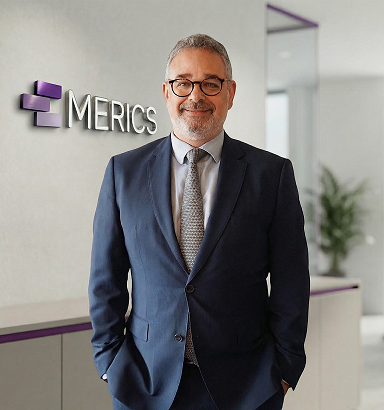
7-TM – We would appreciate receiving general information about MERICS: how it was established, its position as a brokerage company in Lebanon, and information about you personally, Mr. Salim Sehnaoui.
SS – MERICS was established as an independent insurance brokerage and consultancy firm with the objective of bringing international standards, transparency, and advisory-driven services to the Lebanese insurance market. Building on a solid legacy in insurance consultancy and brokerage, MERICS was structured to operate with strong governance, technical depth, and client-centric values. Today, MERICS holds a recognized position in Lebanon as a trusted insurance broker and serves as the official representative of WTW, giving clients access to global expertise, international markets, and best-in-class risk management solutions.
Despite the challenging local environment, MERICS has succeeded in establishing a resilient platform, supported by an experienced team and long-standing relationships with insurers, reinsurers, and corporate clients. Its positioning is focused on complex risks, corporate and medical insurance, advisory services, and tailor-made insurance programs rather than purely transactional brokerage.
As for myself, I have close to 20 years of experience in insurance brokerage and consultancy, working extensively with corporate clients, multinational organizations, and complex risk portfolios. Throughout my career, I have been focused on building long-term partnerships based on trust, professionalism, and value creation. My role today is to lead MERICS with a clear strategic vision, ensuring operational excellence, strong governance, and continuous alignment with international best practices through our partnership with WTW.
Together, MERICS’ institutional strength and leadership experience allow us to serve our clients as a long-term insurance partner, capable of navigating uncertainty while delivering sustainable and responsible growth.